
MTG's 2026 seven-set calendar — what it means for players, stores, and Standard
Wizards of the Coast just handed us the most packed Magic calendar in recent memory. Seven major releases in a single year — up from the typical six — and that seventh slot is not filler. We are talking full Standard-legal sets, each with its own draft environment, spoiler season, and product lineup. If your wallet just flinched, it should have.
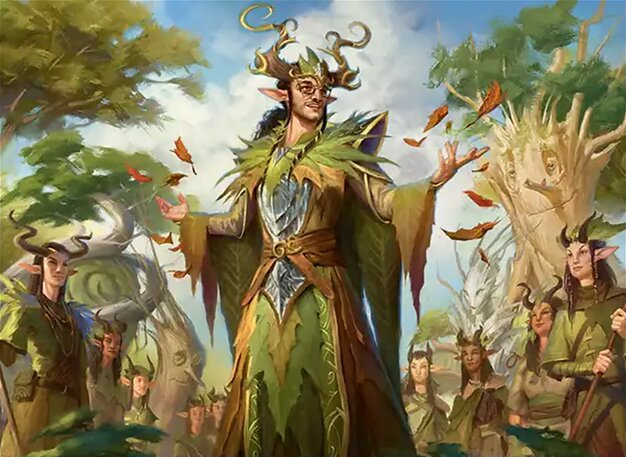
The full 2026 lineup
Here is what the calendar looks like, start to finish:
- Lorwyn Eclipsed — January 23 (in-universe return set)
- Teenage Mutant Ninja Turtles — March (Universes Beyond)
- Secrets of Strixhaven — April (in-universe)
- Marvel Super Heroes — June (Universes Beyond)
- The Hobbit: Tales from the Shire — August (Universes Beyond)
- Reality Fracture — October (in-universe)
- Star Trek — November (Universes Beyond)
That is three original Magic sets and four Universes Beyond crossovers. Every single one is Standard-legal. The official Wizards announcement confirmed the full slate at MagicCon Atlanta, and the Hasbro corporate site doubled down on it. This is not speculation. This is the plan.
What the pace actually means for Standard
Standard rotation happened in August 2025 and the next one is not until 2027. That means every set released this year enters a format that is already holding a full year's worth of cards — and will not shed any of them for another twelve months. By the time Star Trek lands in November, Standard will be one of the largest card pools in recent memory. For deckbuilders, that is opportunity. For metagame watchers, that is a moving target that never stops moving. Expect more frequent shifts in tier-one lists, more sideboards stretched thin trying to cover an expanding field, and more pressure on Wizards to get the power level right on every release — because each set is adding to a format that cannot rotate its way out of a mistake.
The store perspective
Local game stores are already juggling prerelease weekends, launch events, Commander nights, and whatever supplemental product Wizards drops between the main sets. Adding a seventh full release compresses the breathing room between each cycle. Prerelease kits need ordering earlier, shelf space gets tighter, and the marketing window for each set shrinks by roughly two weeks on average compared to a six-set year. The stores that plan well will benefit — more events mean more foot traffic and more sealed product sold across the counter. The stores that do not will find themselves sitting on boxes from the previous set when the next one arrives.
There is a financial reality here too. Distributors have already started adjusting allocation schedules, and store owners on social media have been vocal about the tighter turnaround. The first quarter alone had Lorwyn Eclipsed in January and TMNT in March — roughly seven weeks apart. That kind of cadence rewards stores with strong pre-order pipelines and punishes anyone who over-orders.
Player fatigue is the real risk
Let us not pretend this is just an accounting problem. The human side matters. Spoiler season used to be an event. You would wait, speculate, get genuinely surprised. Now, with seven sets in a calendar year, preview seasons will overlap or run back-to-back for months. The hype machine does not have infinite fuel. Content creators are already stretched — set reviews, draft guides, Standard tech, Commander brewing — and a seventh set means either faster turnaround or lower quality output across the board. Some players will keep up. Plenty will not. And the ones who cannot keep pace risk disconnecting from the competitive conversation entirely.
Wizards has acknowledged this implicitly by confirming the return to six sets in 2027. That tells you everything. Seven was the plan, but even the company behind the plan knows it is a sprint, not a sustainable pace.
Why the Universes Beyond split matters
Four of the seven sets are crossovers. That ratio — more licensed IP than original worldbuilding — is new territory. Wizards is clearly betting that TMNT, Marvel, The Hobbit, and Star Trek bring in adjacent audiences who would never have touched a booster pack otherwise. That bet might pay off. The Lord of the Rings set in 2023 was a financial monster. But it also means that for the first time, a Standard year will be defined more by outside franchises than by Magic's own planes and storylines. Whether that feels exciting or alienating depends on why you play.
What to watch
The real test is not whether these sets sell on release weekend. They will — these are massive IPs with enormous built-in audiences. The test is whether Standard holds together as a coherent format when it is built from pieces of Lorwyn, a Strixhaven sequel, a comic book universe, Middle-earth, the final frontier, and whatever Reality Fracture turns out to be. That is a wild mix. It could be Magic at its most creative, or it could be a format where nothing quite fits together.
We are not calling a winner yet. But we are watching the schedule closer than we have in years. Seven sets is a lot of cardboard. The question is whether it is too much.
Until next time — pace yourselves. The next spoiler season is always closer than you think.
Sources: Wizards 2026 announcement, MagicCon Atlanta lineup release.
Comments
Loading comments…