
Lorcana Winterspell Set Review: Underdog, Rules 2.0, and a Game Hitting Its Stride
Disney Lorcana's winter-themed expansion, Winterspell, released on February 20, 2026 — and it quietly delivered one of the most structurally important updates the game has seen. A new tempo mechanic, a ground-up rules rewrite, a franchise debut, and a revised draft format all arrived in the same box. Individually, each change is meaningful. Together, they signal a game that has moved past the "new TCG" phase and into something more considered. This review breaks down what Winterspell brings, why it matters, and what to watch going forward.
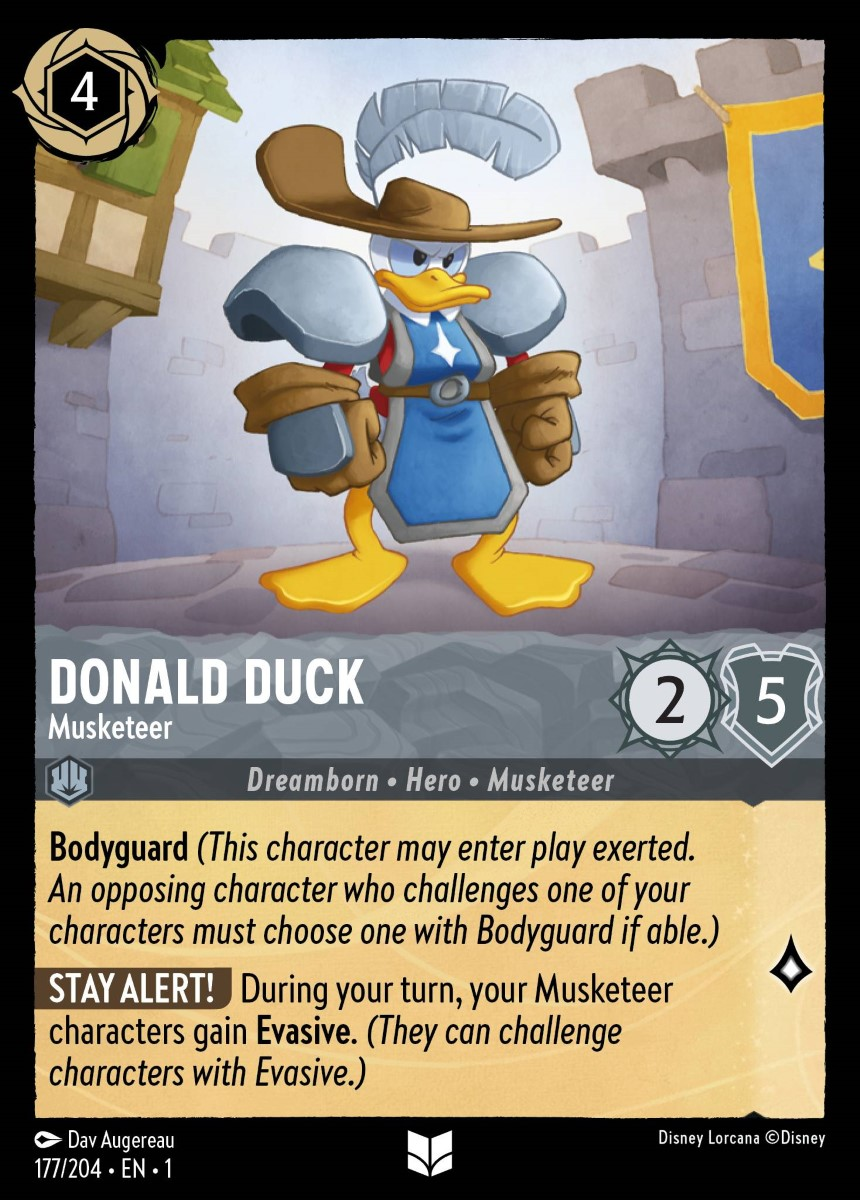
Underdog — Lorcana's answer to first-player advantage
The headline mechanic in Winterspell is Underdog, a keyword that appears on 2-ink cards. When you're behind — specifically, when your opponent went first — Underdog cards cost one ink less to play, effectively making them 1-ink plays. The design intent is straightforward: the second player has historically lacked a clean catch-up tool, and Underdog provides one without warping the game around coin-flip outcomes.
- Scope: Underdog is restricted to 2-ink cards, keeping the discount small and early-game focused.
- Condition: You must be the second player — the mechanic doesn't trigger from falling behind on lore or board state.
- Impact: One-mana tempo swings in the first two turns translate to real board advantages without snowballing. By turn three or four, Underdog cards compete on rate rather than discount.
It's a clean solution. Rather than introducing swingy catch-up cards that punish the leading player, Underdog gives the trailing player a slight acceleration window and then gets out of the way. Early tournament data from post-release events suggests second-player win rates have tightened, though it's too early for definitive conclusions. The mechanic deserves credit for being narrow enough to balance without creating new problems.
Boost mechanic — better integration this time
Boost isn't new to Winterspell, but this set integrates it more deeply than previous appearances. Cards with Boost provide additional effects when you spend extra ink on them — a flexible design that rewards surplus resources without punishing tight curves. Winterspell's Boost cards are better positioned in the set's overall synergy package, particularly in the Mickey's Christmas Carol suite (Emerald/Sapphire), where Boosted characters interact with the set's lore-racing and card-advantage themes. If earlier Boost cards felt like add-ons, Winterspell's feel like they belong.
Comprehensive Rules 2.0 — the maturity milestone
Alongside the set, Ravensburger published Comprehensive Rules 2.0, and this may be the most consequential part of the entire release. Three changes stand out:
- Empty deck no longer means instant loss. Under the old rules, drawing from an empty deck ended the game immediately. Under Rules 2.0, you lose only if you end your turn with no cards in your deck. This opens a window for comeback plays — you can empty your deck during your turn and still win if you close the game before passing. It also eliminates feel-bad moments where mill strategies or aggressive draws could produce unsatisfying instant losses.
- Clearer turn action ordering. The new rules codify the sequence of actions within a turn with less ambiguity. For casual play, the difference is minimal; for competitive play, it removes judge-call gray areas around simultaneous triggers and action windows.
- Better effect resolution. Rules 2.0 tightens how stacked and simultaneous effects resolve, bringing Lorcana's framework closer to the precision expected of competitive TCGs. This matters for tournament integrity and for future card design — cleaner rules let designers push effects further without worrying about unintended interactions.
Rules 2.0 is the kind of update that doesn't generate hype but quietly raises the floor. A game with a clear, comprehensive rulebook is a game that can sustain organized play at scale. This is Lorcana showing it takes its own competitive ecosystem seriously, and that matters more than any single card in the set.
Franchise variety — six themes, one debut
Winterspell draws from a broad franchise palette, and the variety is part of what gives the set its identity:
- Darkwing Duck (Sapphire/Steel) — New to Lorcana entirely. The inclusion of Darkwing Duck brings a 1990s Disney Afternoon property into the card pool for the first time, and Sapphire/Steel gives these characters a controlling, artifact-adjacent identity. A welcome addition for both nostalgia and deck diversity.
- Pocahontas (Amber/Amethyst) — Designed around not-challenging strategies. These cards reward players for keeping characters unexerted and generating value through passive effects rather than combat. A distinct play pattern within the set.
- Mickey's Christmas Carol (Emerald/Sapphire) — The boosting suite. These cards are built around the expanded Boost mechanic and offer some of the set's strongest scaling potential.
- Fox & the Hound (Emerald) — Evasive characters that slip past challenges. Useful for lore-racing strategies that want to avoid interaction.
- Lilo & Stitch (Amber/Steel) — Returning from earlier sets with new tools and updated synergies.
- Frozen (Amethyst/Ruby) — Provides the narrative and thematic backdrop for the set's winter identity, with characters that support both aggressive and defensive lines.
Six franchises across six ink combinations gives Winterspell strong draft and sealed variety. No single franchise dominates the card pool, and the color pairings are distributed well enough that limited formats don't collapse into one or two archetypes.
Draft format change — 35 cards instead of 40
Winterspell also adjusts Lorcana's draft format: constructed draft decks are now 35 cards, down from the previous 40. The reduction has a few practical effects:
- Tighter builds: Fewer slots means less room for filler. Every card needs to earn its place, which raises the average quality of drafted decks.
- Faster games: Smaller decks cycle faster, which means more games per round and more dynamic matches.
- Lower barrier: Needing fewer playable cards per draft makes the format more forgiving for newer players who may struggle to evaluate 40 cards' worth of picks.
Combined with the empty-deck rule change from Rules 2.0, the 35-card format creates an interesting tension: you'll see your deck faster, but running out no longer kills you on the spot. It's a well-designed pairing that makes limited play more strategic and less punishing.
The bigger picture
Winterspell isn't the flashiest set Lorcana has released — it doesn't have a single headline chase card dominating social media. What it has is infrastructure. Underdog addresses a real competitive imbalance. Rules 2.0 gives the game a rulebook worthy of sustained organized play. The draft change makes limited more accessible without dumbing it down. And the franchise lineup shows Ravensburger is willing to pull from deeper cuts in the Disney catalog rather than cycling the same properties.
This is what a TCG hitting its stride looks like. Not every set needs to be a spectacle. Sometimes the best thing a set can do is make the game work better — and Winterspell does that across multiple axes. Whether you play constructed, draft, or collect, there's something structurally improved here for you.
Sources: Official Winterspell release notes · Nerdist Winterspell set review.
Comments
Loading comments…