
Pokemon 2026 Standard Rotation: G Marks Are Out and the H-I-J Era Begins
It finally landed. As of April 10, 2026, every card carrying the G regulation mark is gone from sanctioned Standard play. That means six full Scarlet & Violet era expansions — the base set, Paldea Evolved, Obsidian Flames, 151, Paradox Rift, and Paldean Fates — are no longer legal for in-person tournament decks. Pokemon TCG Live actually flipped the switch two weeks earlier, on March 26, giving digital players a head start on testing. If you showed up to league last week with an Iono in your list, the client already told you what the rest of us are hearing now: your format has changed.
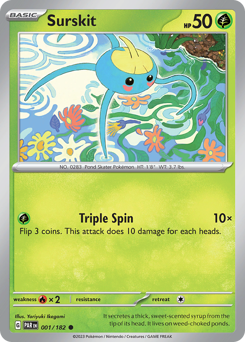
What rotates and what stays
The simplest way to think about it: check the bottom-left corner of your card. If the regulation mark is G, it's out. H, I, and J marks remain legal, and any future marks released this season will enter the format as normal. The six rotating expansions carried most of the early Scarlet & Violet toolkit — the original ex lineup, early Trainer staples, and the Tera mechanic's first wave. What stays is everything from Temporal Forces onward, plus any promotional or special set cards that were printed with H marks or later. Reprints are the wrinkle here: Boss's Orders and Rare Candy, for instance, exist in older sets but have been reprinted with I regulation marks. Those reprinted versions remain legal. Always check the mark, not the set symbol.
The staple losses that reshape everything
This is the part that actually matters for deckbuilding. Iono is gone — the single most ubiquitous Supporter in competitive play, the card that punished opponents for taking prize cards and functioned as both draw and disruption in one slot. Every single competitive Standard list ran Iono. There is no clean one-for-one replacement sitting in the current card pool, so draw engine construction has to be rethought from scratch. Professor's Research rotates alongside it, which means the two default draw Supporters that players have leaned on since 2023 are both leaving at the same time. That kind of double exit hasn't happened often in modern Pokemon, and the ripple effect on deck consistency will be felt at every skill level.
Then there's the Pokemon side. Gardevoir ex was the energy acceleration engine for an entire archetype family — Psychic decks lose their best fuel source. Pidgeot ex was the format's premiere search tool, a card that essentially let you tutor for any card in your deck every turn once it was set up. That kind of consistency crutch being removed means decks that relied on finding specific combo pieces each turn are going to stumble until they find new infrastructure. The Technical Machine cards — Evolution, Devolution, and others — are also out, which quietly removes a layer of flexible tech options that players slotted in to handle niche matchups.
Arven and the Trainer search gap
One loss that deserves its own mention: Arven. This Supporter searched for an Item and a Pokemon Tool simultaneously, making it the backbone of any deck that needed to find its tools quickly — especially decks running heavy Pokemon Tool or specific Item-based combos. Losing Arven means those decks either slow down significantly or need to over-commit to raw draw power to compensate. In a format where Iono already forced careful hand management, losing the most efficient Trainer search card at the same time is a genuine structural hit.
The timeline and how the rollout works
Pokemon staggered this rotation across two dates. The official announcement set March 26, 2026 as the date for Pokemon TCG Live's Standard format update, meaning digital collections and ranked ladders shifted to H-I-J legality two weeks before paper events caught up. In-person Standard becomes enforced starting today, April 10. That gap was intentional — it gives competitive players a digital testing window before Regional Championships and other sanctioned events apply the new card pool. Whether that window is long enough is debatable, but it's more runway than players got in some previous rotation years.
Why this rotation cuts deeper than most
Every rotation removes cards. That's the point. But this one is notable because it removes the consistency backbone of the format rather than just rotating out a few powerful attackers. When you lose your best draw Supporters, your best search Pokemon, and your most flexible tech tools all in the same rotation, every archetype has to rebuild its engine — not just swap out its win condition. The decks that emerge first in post-rotation testing will be the ones that solve the consistency problem fastest, and right now, nobody has a consensus answer. Early results from TCG Live suggest the format is wide open, which is exactly what you'd expect when the skeleton of every deck just got pulled out from under it.
For deckbuilders, the immediate homework is clear: audit every list you own, pull anything with a G mark, and start testing replacements for the draw and search slots that Iono, Professor's Research, Pidgeot ex, and Arven used to fill. For collectors and traders, watch the price action on H-and-later Supporters — if a new draw Supporter from an upcoming set gets previewed, it'll move fast.
The format just got younger, leaner, and a lot less predictable. That's either terrifying or exciting, depending on how much you liked your old list. — Barnaby
Comments
Loading comments…