
The Reserved List in 2026: five dangers that aren't going away
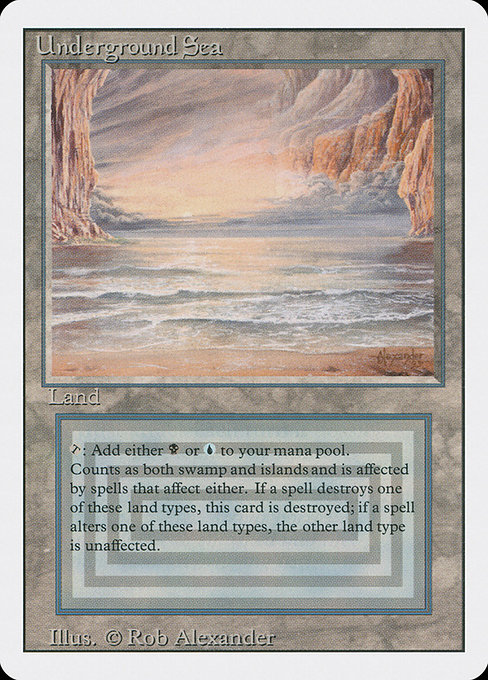
The Reserved List is almost thirty years old. Created in 1996 after Chronicles cratered card values, it is Wizards of the Coast's promise that 572 specific cards will never be reprinted. In 1996 that promise made a certain kind of sense — the secondary market was young, trust was fragile, and collectors needed a reason to keep buying. In 2026, the landscape looks nothing like 1996. Commander is the most popular format in the game's history. Legacy is shrinking. A single copy of Underground Sea costs more than most people's entire Standard deck collection. And the list that was supposed to protect confidence is now one of the most persistent sources of tension in the hobby.
This is not an argument for or against abolishing the Reserved List. We are not here to tell Wizards what to do. We are here to lay out the dangers — the real, measurable ways the list is shaping (and distorting) the game in 2026 — and let you look at the data.
Danger 1: Legacy is losing players it cannot replace
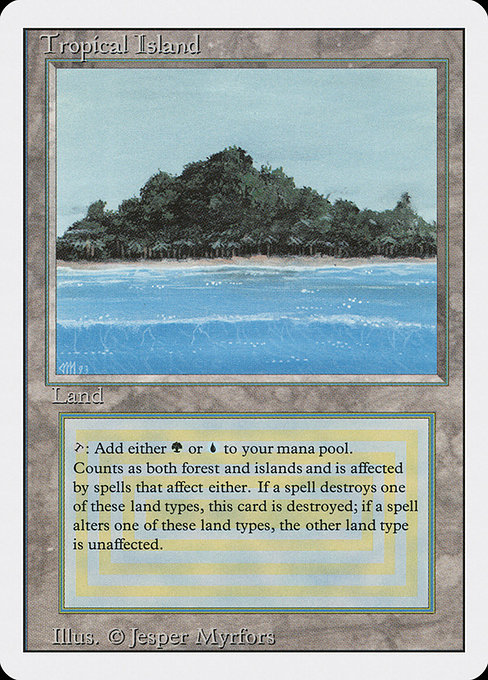
Legacy has always been an expensive format. That was part of its identity — old cards, deep knowledge, high buy-in. But there is a difference between "expensive" and "inaccessible," and the Reserved List has pushed several Legacy staples past the line. A competitive Legacy mana base typically requires three to four dual lands, and the cheapest of those — Tropical Island — sits around $530. Underground Sea is approaching $930. A four-color manabase can run $2,000–3,000 in dual lands alone, before you buy a single spell. That is not a barrier new players climb over. It is a wall they walk away from. Legacy event attendance has been declining at the local and regional level for years, and while there are multiple factors at play (MTGO availability, store space, format complexity), the price of entry is the one that comes up most often when players explain why they stopped showing up. The Reserved List does not kill Legacy overnight. It bleeds it out slowly, one potential new player at a time.
Danger 2: Commander's growth is running headfirst into the list
Commander is where the Reserved List friction is felt most broadly in 2026. The format has exploded — it is the most-played paper format by a wide margin — and its playerbase includes millions of people who started after the Reserved List was created. These players hear about dual lands, look up the price, and make one of two choices: use budget alternatives (shock lands, pain lands, fetches-plus-basics) or use proxies. Either option works at the kitchen table, but it creates a two-tier system where the "real" version of a card is financially out of reach for most of the community that wants to play it. When EDHREC data shows Underground Sea in the top 300 cards by inclusion, but only a fraction of players can afford the real thing, you have a format where the most-wanted cards are also the most-gatekept. That is not a healthy long-term dynamic.
Danger 3: Design space is quietly shrinking
This danger is less visible to players but arguably more consequential for the game's future. The Reserved List does not only prevent reprints — it constrains what Wizards can design going forward. Functional reprints of Reserved List cards are off-limits. Cards that are "too close" to a Reserved List entry risk legal or policy scrutiny. That means the design team has to work around a set of 572 cards it can never reprint, reference too directly, or replace with a mechanically identical version. In 2026, a leaked card called Emeritus of Ideation reignited this debate by appearing to test whether transform mechanics could circle back to effects historically associated with Reserved List cards. Whether that card ever sees print or not, the fact that it generated discussion tells you how tight the design constraints have become. Head Designer Mark Rosewater has publicly acknowledged that Commander's growth has increased demand for Reserved List reprints. That acknowledgment is not a promise, but it is a temperature reading — the people who make the game feel the pressure too.
Danger 4: The counterfeit market is a direct consequence
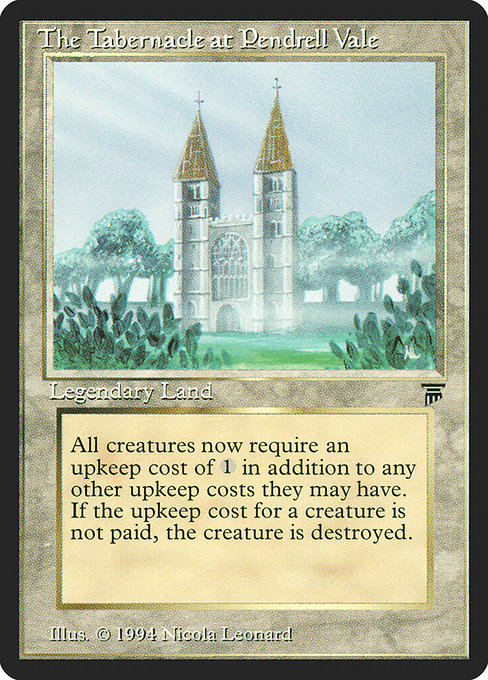
When real cards cost hundreds or thousands of dollars, counterfeit production becomes economically viable. This is not speculation — the counterfeit MTG market has grown significantly over the past five years, and the cards most commonly counterfeited are overwhelmingly from the Reserved List. Dual lands, The Tabernacle at Pendrell Vale, and Power 9 cards are the primary targets because the price-to-counterfeit ratio is highest there. At nearly $2,900, a convincing Tabernacle fake has enormous profit margins. The Reserved List did not invent counterfeiting, but by guaranteeing that supply will never increase through legitimate channels, it has created a permanent incentive structure for illegitimate ones. Every year the list remains intact and prices rise, the counterfeit market becomes more sophisticated and more profitable. That is a danger not just for collectors — it is a danger for the integrity of the secondary market itself.
Danger 5: The community fracture is already here
The Reserved List debate has split the Magic community into camps that rarely convince each other. On one side: collectors and long-term investors who hold Reserved List cards as assets, trust the promise, and view any discussion of abolition as a threat to their holdings. On the other side: players who see the list as an anachronism that prices them out of formats and cards they want to play. In the middle: people who would rather not think about it at all but have to every time they price out a Legacy deck or see a Commander wish-list card they cannot afford. The fracture is not theoretical. It shows up on Reddit, on Twitter, at local game stores, and in Wizards' own engagement data. It shapes how people feel about the game, how they spend money, and whether they stay. A policy designed to protect confidence has, over three decades, become a source of chronic low-level conflict within the community it was supposed to reassure.
Where things stand in 2026
Wizards has not signaled any imminent change to the Reserved List. The policy has been modified before — premium reprints were removed from the exception in 2010, and Limited Edition commons and uncommons were taken off the list years ago — but the core promise remains. High-grade Power 9 and Reserved List cards are trading 10–20% below their 2022–2024 peaks after a post-pandemic correction, but volume is up roughly 15% since late 2025. The market is not collapsing. But the structural tensions — accessibility, design constraints, counterfeit incentives, community trust — are not going away either. They are built into the list itself.
We are not calling a top or a bottom on any of these cards. We are not telling you to buy, sell, or hold. We are telling you to look at the charts below, understand what these prices mean for the game's long-term health, and make your own judgments. The Reserved List is almost thirty years old. It may last thirty more. But the dangers are real, they are measurable, and they deserve to be discussed without pretending they do not exist.
Until next time — may your lands always enter untapped, even if they cost a month's rent.
Comments
Loading comments…