
Digimon BT-25 Dual Revolution: The Dual Card Mechanic Changes Everything
For five years the Digimon Card Game has iterated within a framework everyone understood: Digimon digivolve, Options resolve, Tamers sit on the field. BT-25 "Dual Revolution" breaks that framework. The 25th booster set, arriving worldwide in May 2026, introduces Dual Cards — a single physical card carrying two different card categories — and in doing so asks a question the game hasn't had to answer before: what happens when a card is two things at once?
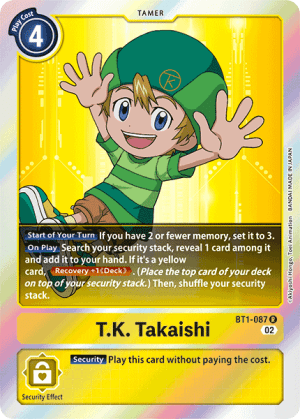
How Dual Cards Work — and Why They Matter
A Dual Card has two distinct card categories printed on the same card. One side functions as an Option effect; the other operates as a different category entirely. The mechanic also introduces "Arts Digivolve," tying digivolution triggers into the Dual Card's secondary function. In practical terms, this means a single card slot in your deck can serve two roles depending on game state — an Option when you need interaction, a digivolution piece when you need board development. That's not a minor efficiency gain. That's a structural shift in how decks are built. Card slots have always been zero-sum in Digimon: every Option you add is a Digimon you don't. Dual Cards collapse that trade-off, and the deckbuilding implications will ripple through every competitive list once BT-25 is legal.
Ultimate Rare: A New Ceiling
BT-25 also introduces the Ultimate Rare (UR) rarity tier, sitting above Super Rare in the pull hierarchy. The full set breakdown runs 106 card types: 40 Common, 26 Uncommon, 22 Rare, 12 Super Rare, 2 Secret Rare, 4 SP Cards, and 22 Alternative Art versions. Each box contains 25 packs of 12 cards. The new rarity tier is a collector play, obviously — but it also signals Bandai's confidence that the Digimon secondary market can support a premium chase tier without alienating the competitive player base. Whether that confidence is warranted depends entirely on whether Ultimate Rares carry competitive staple effects or remain flashy cosmetics. History suggests Bandai will try to split the difference.
The April Restrictions Were the Prologue
If you read the April 2026 restriction analysis, you'll recall that Bandai's notes repeatedly cited "preserving design space for future cards." BT-25 is those future cards. The restrictions on Shakkoumon, MaloMyotismon, SkullBaluchimon, and the purple shell weren't reactions to an unbeatable meta — they were runway-clearing for Dual Cards. Shakkoumon's inherited-effect loops would have compressed Dual Card interactions into existing engines before the mechanic could establish its own identity. MaloMyotismon's persistent effects would have forced every Dual Card with Myotismon adjacency to be costed defensively. The timing is not subtle: restrict in April, release in May. Bandai wants Dual Revolution to define the format, not get absorbed by it.
Starter Deck Synergies: BeatBreak and Data Squad
BT-25 is designed to support themes from the upcoming Starter Decks ST-23 (Digimon BeatBreak) and ST-24 (Digimon Data Squad). This is standard Bandai practice — starter decks establish an archetype's foundation, and the following booster provides the competitive ceiling — but it matters more here because Dual Cards will likely appear at higher rarities while the starter deck shells provide accessible entry points. If you're a new or returning player eyeing the Dual Card mechanic, the starter decks are where you begin. The booster is where you finish. Alternate art versions of restricted cards also appear in BT-25, giving collectors a second angle on cards whose competitive utility just got curtailed. A restricted card with a premium art treatment is a very specific kind of collectible: beautiful to own, painful to remember.
What Competitive Players Should Watch
Three things. First, how Arts Digivolve interacts with existing digivolution cost reducers. If legacy cards like those in blue or purple shells can accelerate Arts Digivolve the same way they accelerate standard digivolution, the mechanic could warp around those engines despite the restrictions. Second, whether Dual Cards count as Options in the trash, in security, or on the field — because trash-based strategies and security-check interactions will behave very differently depending on which category the game recognizes at any given moment. Third, the ratio of competitively playable Dual Cards to chase-rarity-only Dual Cards. If the best Dual Cards are all Super Rare and above, the mechanic's impact on grassroots-level competition will be muted. Bandai has generally been good about distributing competitive power across rarities, but a new mechanic in a new rarity structure is worth watching closely.
The 2026 Roadmap: BT-25 → EX12 → Beyond
Dual Revolution is not an isolated release. EX12 "World Shambala" follows in July 2026, already confirmed to include a new Siriusmon at Super Rare and SeitenGokuumon at Ultimate Rare — meaning the UR tier will immediately carry over into the EX series. The cadence is clear: BT-25 introduces the Dual Card mechanic, EX12 expands it, and whatever comes after (presumably BT-26 in the fall) will iterate on a format where Dual Cards are the established norm rather than the new variable. Players who wait for EX12 to engage with Dual Cards won't be late, but they will be reacting to a meta that early adopters have already shaped. The competitive window between May and July is where the mechanic's first tier list will be written.
Source: Official Digimon Card Game — Booster Set 25: Dual Revolution product page.
New card types, new rarities, new rules text to misread at 1 a.m. before a regional. The game grows up by getting more complicated — same as the rest of us.
Comments
Loading comments…